
Recommended Reading List
Some of Our Favorites
There are a lot of great books related to neurodivergence. While we haven’t read them all, we wanted to share some that resonated with us in some way.
Some of these recommendations are easier reads, some may challenge you quite a bit, and not all parts of all books may be helpful. We encourage you to take what resonates and leave what doesn’t – after all, we’re all so wonderfully unique!
While these aren’t linked to any particular purchase site, feel free to check with the libraries on campus or your own local library, or purchase at your favorite book-purchasing place.
The Neurodivergent Skills Workbook for Autism and ADHD
by Jennifer Kemp, Mpsych and Monique Mitchelson, Mpsych
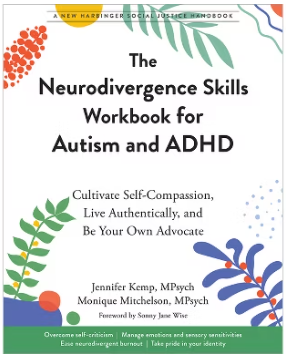
As an autistic person or neurodivergent individual with attention-deficit hyperactivity disorder (ADHD), you may sometimes feel as if you’re living in a world that wasn’t designed for you. You may have sensory sensitivities, social difficulties, struggles with executive functioning, sleep issues, depression, anxiety, burnout and meltdowns, and trauma from a lifetime of marginalization and microaggressions.
If you are struggling with your neurodivergent identity, know that you aren’t alone. Whether you were diagnosed as a child or are just now realizing your difference, this workbook can help you move beyond the internalized message that there is something wrong with you, so you can embrace who you really are and manage stress before it leads to neurodivergent burnout.
The Neurodivergence Skills Workbook for Autism and ADHD offers acceptance and commitment therapy (ACT) and self-compassion skills tailored to the needs of neurodiverse people-especially those with ADHD and Autism-so you can live authentically, take pride in your identity, increase overall well-being, and build meaningful connections to thrive as a neurodivergent person in the modern world.
The Canary Code: A Guide to Neurodiversity, Dignity, and Intersectional Belonging at Work
by Ludmila N. Praslova PhD
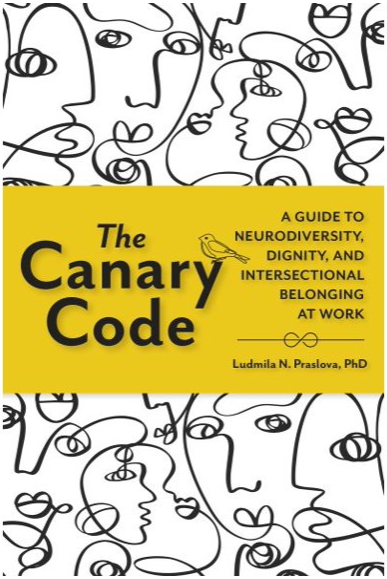
From a member of the Thinkers50 2024 Radar cohort of global management thinkers most likely to impact workplaces and the first person to have written for Harvard Business Review from an autistic perspective comes The Canary Code—a guide to win-win workplaces.
Currently, despite their skills and work ethics, members of ADHD, autism, Tourette Syndrome, learning differences, and related communities face drastic barriers to hiring and advancement. In the US, 30-40% of neurodivergent people and 85% of autistic college graduates struggle with unemployment. Lack of flexibility, transparency, and psychological safety excludes neurodivergent, disabled, and multiply marginalized talent—and leaves most employees stressed and disengaged.
This unique book is a guide to change-making for CEOs, managers, HR leaders, and everyone who wants to contribute to building a more inclusive world.
The Canary Code combines lived experience with academic rigor, innovative thought leadership, and lively, accessible writing. To support different types of listeners, academic, applied, and lived experience content is clearly identified, helping listeners choose their own adventure.
Unmasking Autism
by Devon Price
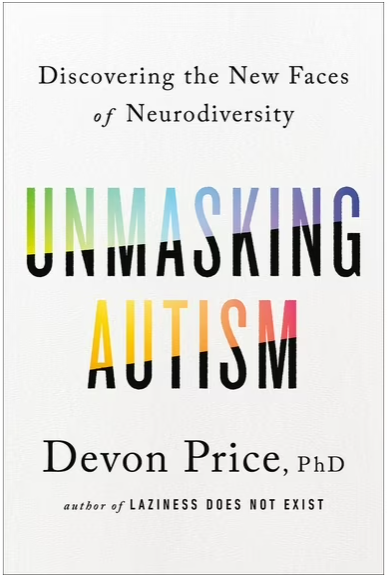
For every visibly Autistic person you meet, there are countless “masked” Autistic people who pass as neurotypical. Masking is a common coping mechanism in which Autistic people hide their identifiably Autistic traits in order to fit in with societal norms, adopting a superficial personality at the expense of their mental health. This can include suppressing harmless stims, papering over communication challenges by presenting as unassuming and mild-mannered, and forcing themselves into situations that cause severe anxiety, all so they aren’t seen as needy or “odd.”
In Unmasking Autism, Dr. Devon Price shares his personal experience with masking and blends history, social science research, prescriptions, and personal profiles to tell a story of neurodivergence that has thus far been dominated by those on the outside looking in. For Dr. Price and many others, Autism is a deep source of uniqueness and beauty. Unfortunately, living in a neurotypical world means it can also be a source of incredible alienation and pain. Most masked Autistic individuals struggle for decades before discovering who they truly are. They are also more likely to be marginalized in terms of race, gender, sexual orientation, class, and other factors, which contributes to their suffering and invisibility. Dr. Price lays the groundwork for unmasking and offers exercises that encourage self-expression, including:
Celebrating special interests
Cultivating Autistic relationships
Reframing Autistic stereotypes
And rediscovering your values
It’s time to honor the needs, diversity, and unique strengths of Autistic people so that they no longer have to mask—and it’s time for greater public acceptance and accommodation of difference. In embracing neurodiversity, we can all reap the rewards of nonconformity and learn to live authentically, Autistic and neurotypical people alike.
The ADHD Effect on Marriage
by Melissa Orlov
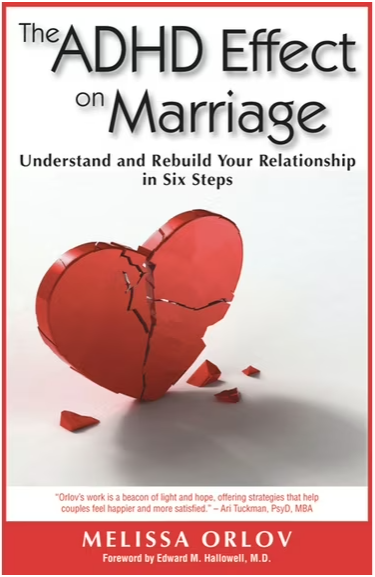
An invaluable resource for couples in which one of the partners suffers from attention deficit hyperactivity disorder (ADHD), this authoritative book guides troubled marriages toward an understanding of and appreciation for the struggles and triumphs of a relationship affected by it and to look at the disorder in a more positive and less disruptive way.
Going beyond traditional marriage counseling, this discussion offers advice from the author’s personal experience and years of research and identifies patterns of behavior that can hurt marriages – such as nagging, intimacy problems, sudden anger, and memory issues – through the use of vignettes and descriptions of actual couples and their ADHD struggles and solutions. This resource encourages both spouses to become active partners in improving their relationship and healing the fissures that ADHD can cause.